Tile and Flat Roof Repair in Naples, Florida
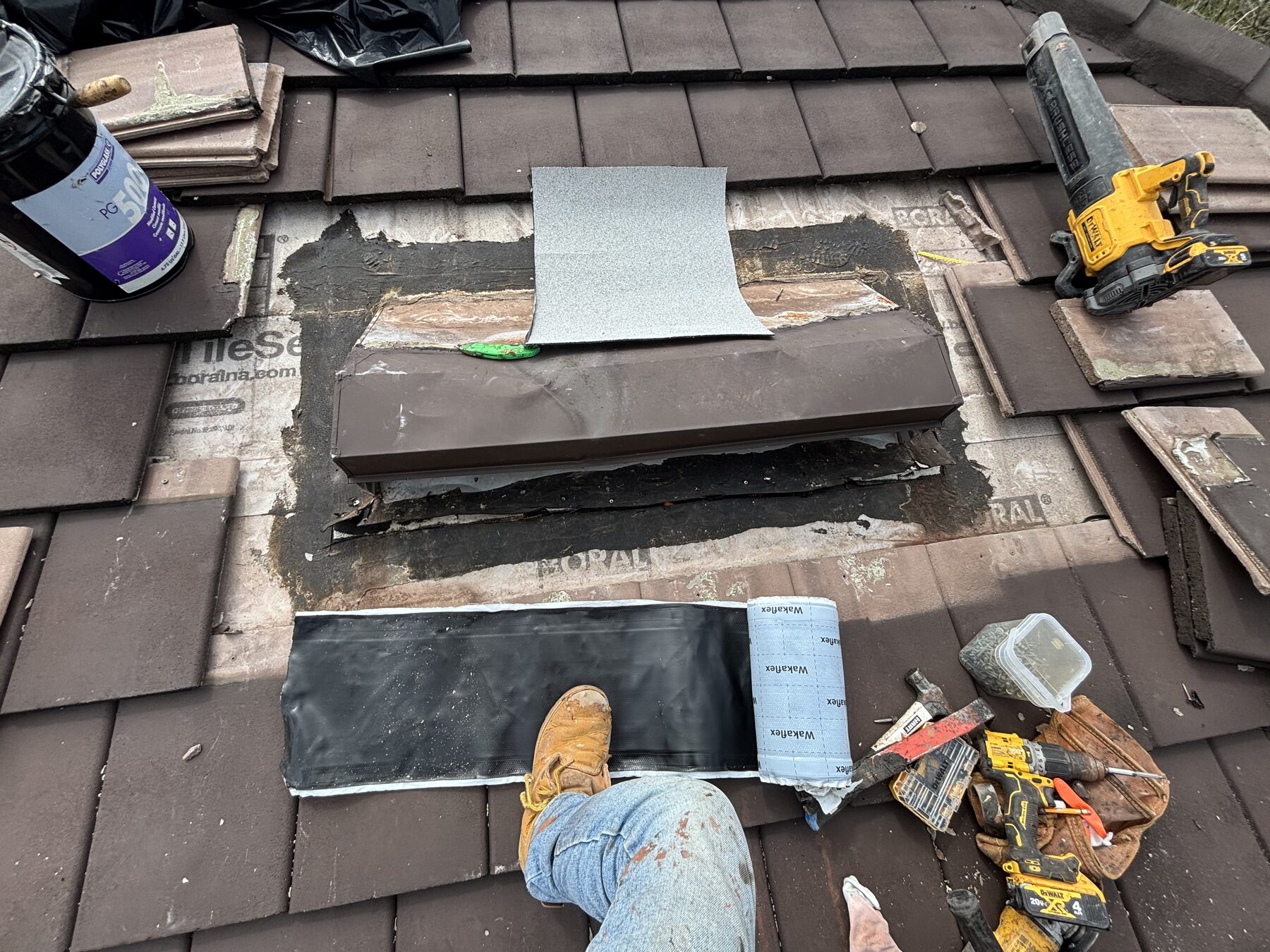
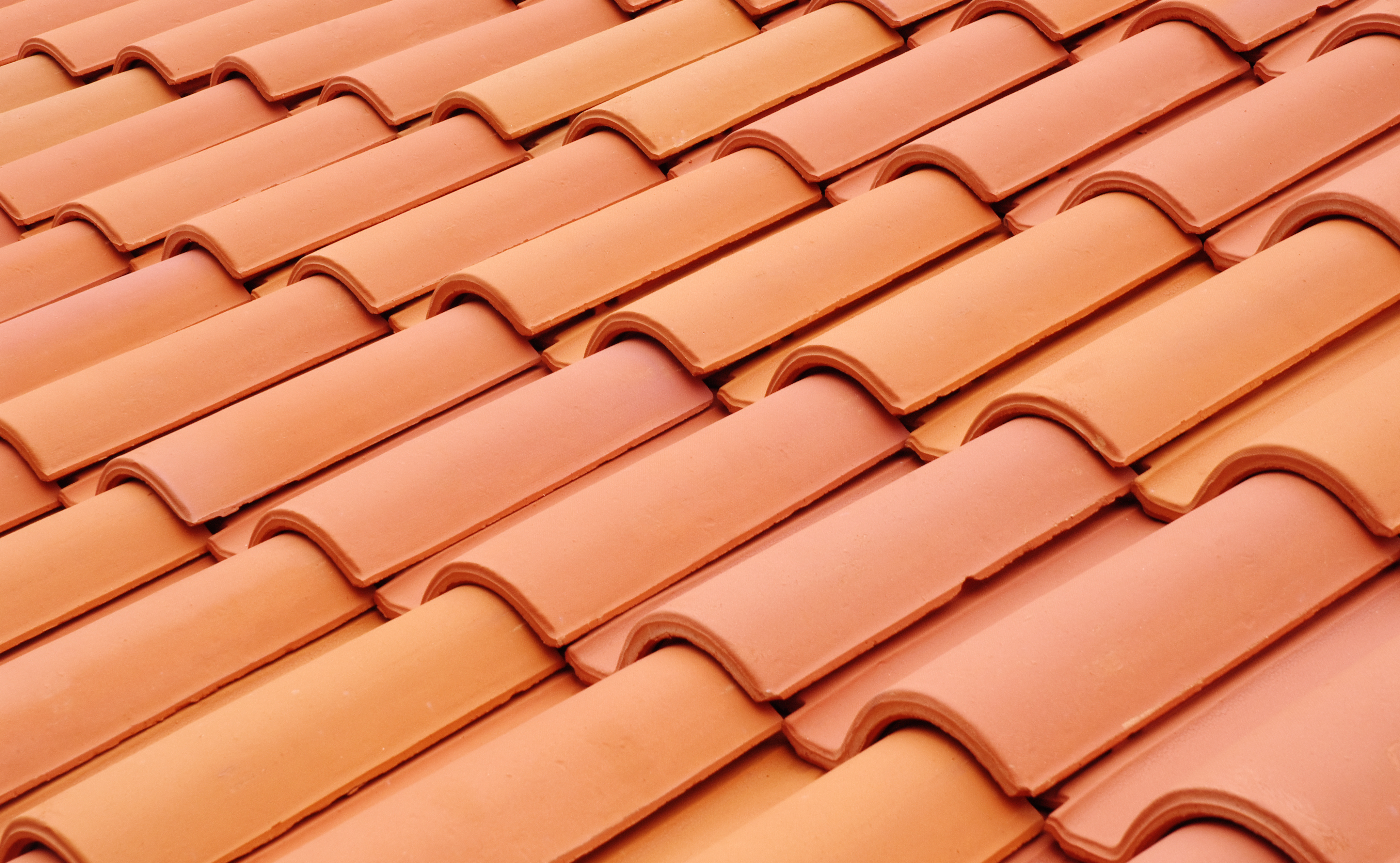
Tile and flat roofs are the two systems most likely to be misdiagnosed in Southwest Florida, and the two where the difference between a repair and an unnecessary replacement is most consequential. C&C Home Solutions repairs tile, repositions slipped tile, works TPO and EPDM flat sections, and applies roof coatings where they genuinely help. Corey Christiansen performs every job himself. Call (239) 537-1649.
What You Need to Know About Tile Roofs Here
Tile lasts decades. Underlayment does not. In this climate, underlayment ages considerably faster than the tile above it, which produces the situation we see constantly: a roof where every tile looks perfect from the street and the actual waterproofing layer is at or past the end of its life.
It also means the correct question about a tile roof is never how the tile looks. It is what condition the underlayment is in, which is why underlayment assessment is central to every tile inspection we perform.
Tile Repair and Repositioning
A significant share of tile roof problems are repositioning issues rather than damage.
Tiles slip. Wind, foot traffic from other trades, settling, and failed mortar at ridges and hips all move tile out of position. A tile that has slipped a few inches exposes the underlayment beneath it to direct sun and rain, which is exactly the condition that degrades underlayment fastest. Nothing is broken and nothing looks dramatic, but the roof's actual barrier is now being attacked directly.
Repositioning tile correctly means resetting it in proper alignment and coverage, re bedding ridge and hip tile where the mortar has failed, and checking the underlayment in the area before closing it back up.
This is delicate work. Tile is brittle, particularly older tile, and a repair that cracks four tiles to fix one is not a repair. It is one of the areas where having the owner do the work rather than a rotating crew matters most.
Cracked, Broken, and Missing Tile
Damage comes from impact and from foot traffic more often than from storms.
Falling limbs crack tile. So does anyone walking a tile roof without knowing how to do it, which includes a lot of pressure washing operations, satellite installers, and general handymen. Storm debris breaks tile. Older tile becomes brittle enough to crack under loads it would have handled when new.
Repair means replacing the damaged tile with matched product where available, and correcting whatever is beneath it. On older roofs where the original tile profile or color is discontinued, we source the closest match available and place repairs to minimize the visual difference. Homeowners often have spare tile stored somewhere on the property from the original construction, so it is worth checking before we source new.
Flat and Low Slope Sections
Most Southwest Florida homes have some flat or low slope area even when the main roof is pitched tile: lanai covers, additions, porch roofs, and entryway sections.
These fail differently. A low slope roof does not shed water quickly, so water sits. Ponding is the defining problem, and it is caused by inadequate slope, by settling, or by clogged drainage. Standing water breaks down membrane over time and finds any defect eventually. Seams and terminations are the other common failure point, along with penetrations for vents and mechanical equipment.
Flat roof leaks are also the hardest to trace, because water that gets past the membrane can travel laterally inside saturated insulation and appear far from the entry point. This is where thermal imaging earns its keep.
TPO and EPDM Repairs
The two membrane types we see most on residential and small commercial low slope roofs here are TPO and EPDM.
TPO is a single ply thermoplastic membrane, usually light colored, which is an advantage in Florida because it reflects heat rather than absorbing it. Its seams are heat welded. TPO repairs generally involve re welding failed seams, patching punctures with compatible material, and correcting flashing at penetrations and terminations.
EPDM is a synthetic rubber membrane, typically dark, and it is durable and flexible. Its seams are adhered rather than welded, and seam adhesion is the usual failure point along with punctures and shrinkage pulling at terminations. EPDM repairs use compatible patching and seam materials.
The critical rule with both is material compatibility. Patching a TPO roof with EPDM materials or the wrong adhesive produces a repair that fails, sometimes quickly. Roofing cement smeared over a membrane defect, which we find regularly, is not a repair.
Roof Coatings
Coatings have a legitimate role and they are also frequently oversold, so here is the honest version.
A coating applied to a sound low slope roof adds a seamless protective layer, reflects heat, and can extend service life meaningfully. On a flat roof that is aging but structurally fine and not actively leaking, a coating is often a genuinely good investment.
A coating applied over a roof with wet insulation, failed decking, or an unresolved leak seals the problem inside where it continues to get worse out of sight. That is not maintenance, it is concealment, and we will not do it.
Corey will tell you which situation your roof is in. If the honest answer is that a coating would be covering a problem rather than solving one, that is what you will hear.
What the 2022 Code Change Means for Tile Roofs
This matters more for tile than for anything else, because tile roofs are where the old rule caused the most damage.
Before May 2022, Florida code required that if more than 25 percent of a roof section was repaired, replaced, or recovered within a twelve month period, the entire roofing system or section had to be replaced to current code. On a tile roof, where localized underlayment failure is normal and expected, that rule pushed a great many homeowners into full replacements they did not structurally need.
Senate Bill 4-D changed it. For roofs built, repaired, or replaced in compliance with the 2007 Florida Building Code, which took effect March 1, 2009, or any edition since, the repaired portion must meet current code but the undamaged remainder does not have to be replaced.
Whether your roof qualifies depends on its age, its compliance history, the specific damage, and what the county determines. It is a conversation worth having before signing a replacement contract, and since we do not sell replacements, you can have that conversation with us without a sales agenda attached.
Frequently Asked Questions
My tile roof looks fine but I have a leak. How is that possible?
The tile is not the waterproofing layer. The underlayment beneath it is, and underlayment ages much faster than tile in this climate. A roof with perfect looking tile can have underlayment at the end of its life.
Can slipped tiles be reset, or do they need to be replaced?
Slipped tiles can usually be reset if they are undamaged. Repositioning them properly and re bedding ridge and hip tile where mortar has failed restores coverage without replacing anything.
Someone quoted me a full replacement for a tile roof leak. Do I need it?
Not necessarily, and it is worth a second opinion. Florida law changed in 2022 so that localized repairs no longer automatically trigger a full replacement on code compliant roofs. We do not sell replacements, so our assessment has no sales incentive behind it.
Why does my lanai roof pond water after every rain?
Low slope roofs shed water slowly by design, and ponding is caused by inadequate slope, settling, or blocked drainage. Standing water degrades the membrane over time, so it is worth correcting rather than living with.
Is a roof coating a good idea for my flat roof?
On a sound low slope roof that is aging but not leaking, yes, a coating can extend its life and reflect heat. On a roof with wet insulation or an active leak, a coating just seals the problem inside, and we will not apply one in that situation.
Can you match my existing barrel tile?
In most cases yes, or the closest available equivalent. Many homeowners also have original spare tile stored on the property from construction, so it is worth checking before we source replacements.