Roof Repair in Marco Island, Florida
An Island Roof Is a Harder Job Than a Mainland Roof
Salt exposure on Marco Island is among the most aggressive in our service area. The ocean surrounds the island on multiple sides, and saltwater air attacks metal components faster here than almost anywhere else we work.
Wind exposure is the second factor. With open water on multiple sides, wind arrives without the buffering that inland tree cover and neighboring structures provide, and wind driven rain gets into details that shed water fine elsewhere.
The third is simply the roofs themselves. Marco has a lot of large two story homes with steep tile roofs, complex hip and valley geometry, and extensive flat sections over lanais and pool cages. Those are demanding roofs to work safely and correctly.
Storm History and What It Left Behind
This island has taken direct hits. Hurricane Irma made landfall here in September 2017, and Hurricane Ian in September 2022 brought significant wind and surge to Southwest Florida generally.
Two lasting effects show up in the work. The first is deferred and partial repairs. In the rush after a major storm, a lot of roofs got emergency work that was never properly completed, and we still find tarps that were never followed up, sealant used in place of real flashing repair, and mismatched tile set without addressing the underlayment beneath.
The second is storm chaser residue. After every major event, out of state operators arrive, work fast, and leave. Some island homeowners are still living with the results.
If a repair on your roof was done in the aftermath of either storm and you have never had it properly assessed since, that is worth doing.
Tile, Mortar, and Foot Traffic
Barrel tile dominates, and on the island the specific problems are amplified.
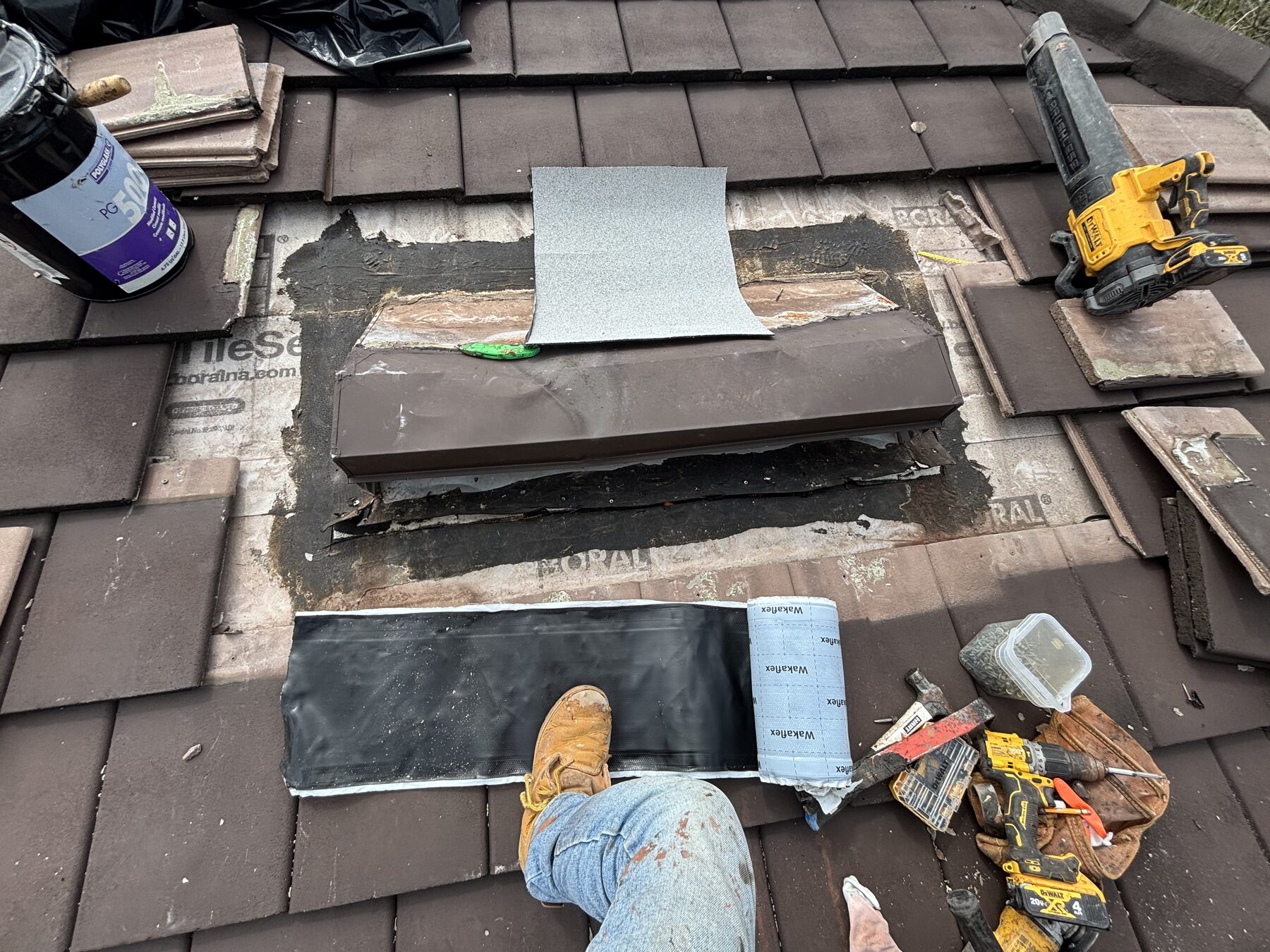
Ridge and hip mortar fails faster under salt and wind exposure, which lets the cap tiles loosen and shift. Field tile slips and cracks. And because island homes see a steady stream of contractors on the roof, from pressure washing to screen enclosure work to equipment service, cracked tile from careless foot traffic is extremely common.
Older tile is brittle. Repairing it without breaking more of it is genuinely a skill, and it is the main argument for having the owner do the work rather than whoever a company sent that day.
Lanai and Pool Cage Roof Sections
Nearly every Marco home has flat or low slope area over a lanai, entry, or pool enclosure, and these are a disproportionate share of the leaks.
They pond because they shed slowly by design. Membrane seams and terminations open up. Penetrations for lighting, fans, and mechanical equipment become entry points. And because water travels laterally inside a saturated low slope assembly, the leak shows up far from where it entered, which is why thermal imaging is genuinely useful on these roofs.
Frequently Asked Questions
How much faster do roofs deteriorate on Marco Island?
Metal components deteriorate noticeably faster here than on the mainland because of constant salt exposure. Fasteners, flashing, drip edge, and gutter hardware are the first to show it.
I still have storm damage that was never properly repaired. Can you assess it?
Yes, and it is a common call on the island. We find tarps that were never followed up and emergency repairs that were never completed properly, sometimes years later.
Do you charge extra to come out to the island?
Travel is included in the written estimate you approve before work starts. We work Marco Island regularly and there are no surprise charges.
My tile roof cracked where someone walked on it. Is that repairable?
Yes. Cracked tile from foot traffic is replaced with matched product, and we assess the underlayment in the area before closing it back up.
Why does my lanai roof leak in a spot nowhere near any damage?
Water that gets past a low slope membrane travels sideways inside the assembly before it comes through. Thermal imaging maps where the moisture actually is so the repair addresses the real entry point.