Roof Repair in Pelican Bay, Florida

Working Inside an Association Community
Pelican Bay is one of North Naples' best known communities, built from the eighties onward on the Gulf side of US 41, with a mix of single family homes, villas, and mid rise buildings connected by the boardwalks out to the beach.
Working here means working within association rules, and that is genuinely part of the job. Many communities within Pelican Bay have architectural standards covering roof appearance, approved materials and colors, requirements around visible staining, and rules about contractor hours and access. Some require approval before work begins.
Corey works within those requirements rather than around them. If your association needs a scope description, repair photos, or scheduling information before approving work, that is a normal request and we can provide it.
Salt Air This Close to the Beach
Pelican Bay sits directly against the Gulf, and the roofs here take the heaviest salt exposure in our service area outside of the barrier islands.
Two practical consequences. First, metal degrades faster: fasteners, flashing, drip edge, and gutter hardware all corrode more quickly than they would a few miles inland. Second, algae growth is accelerated, which is why roofs here streak visibly sooner. Where an inland Naples roof might hold up for two to three years between cleanings, coastal properties here commonly need attention every eighteen months to two years.
Given that many associations have standards about visible roof staining, staying ahead of that cycle is not purely cosmetic. It is often a compliance matter.
Tile, Flat Sections, and What Actually Fails
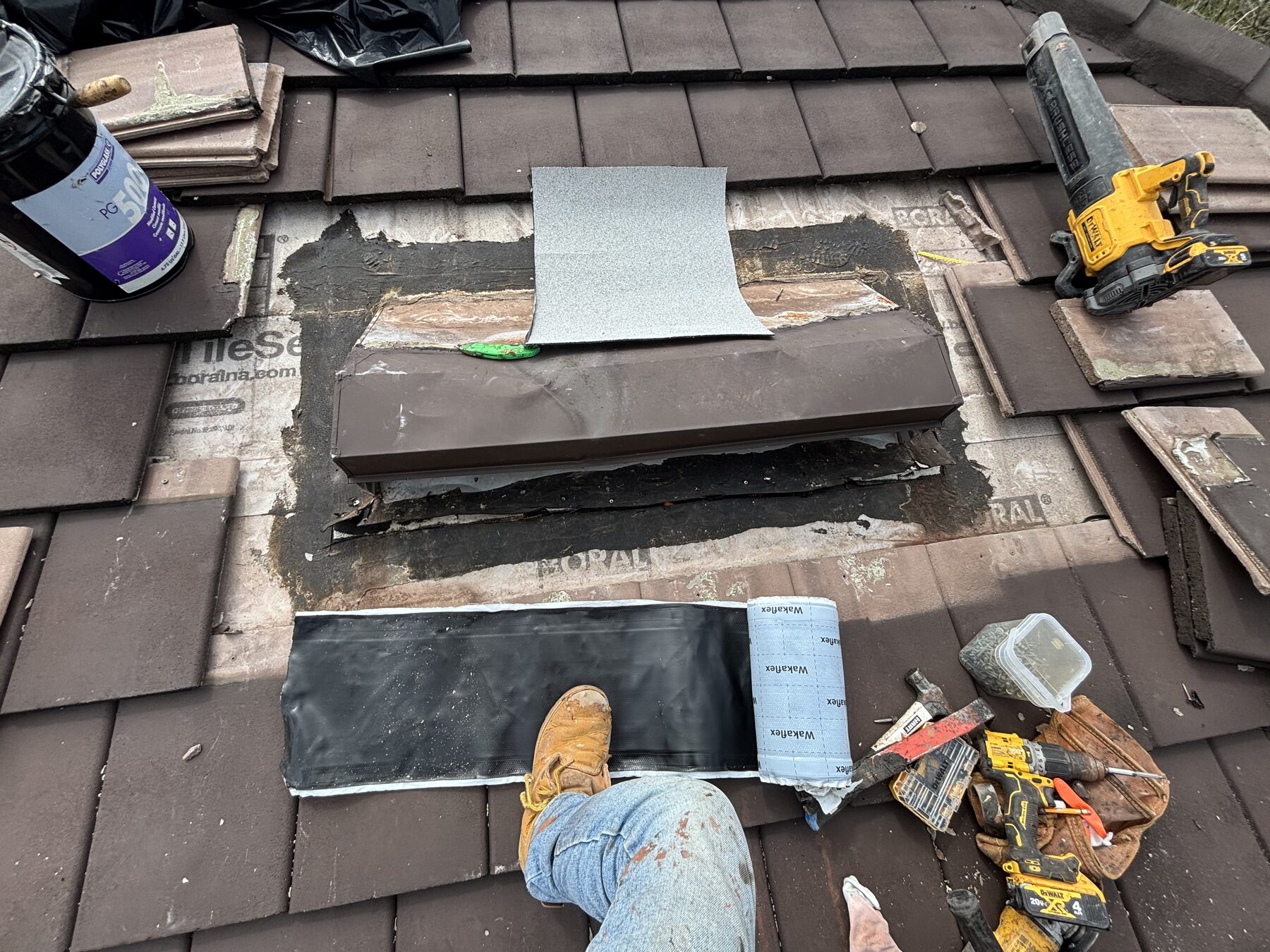
Tile dominates here, and the tile itself is rarely the problem. Underlayment is. On homes built in the eighties and nineties, underlayment is well into or past its expected life even where every tile looks perfect, and that is the assessment that actually matters on a Pelican Bay roof.
Beyond that: slipped tile from wind or foot traffic, failed mortar at ridges and hips, pipe boot and skylight flashing, and ponding on the flat sections over lanais and entryways.
Foot traffic deserves a specific mention. Tile roofs in communities like this see a lot of it from pressure washing crews, screen and cage contractors, and equipment technicians, and cracked tile from careless walking is a frequent finding.
Scheduling Around Season
North Naples empties out and fills back up on a predictable calendar, and a lot of homes here are seasonal.
If you are not in residence, we can inspect, document with photos, and report on a roof without you present, which is worth doing before you return rather than discovering a problem after a summer of storms. For seasonal owners, an inspection each spring after the wet season is the single most useful thing you can schedule.
Frequently Asked Questions
Do you provide documentation for association approval?
Yes. We provide scope descriptions, repair photos, and scheduling information as needed for architectural review or management company approval.
How often should a roof near the beach be cleaned?
Typically every eighteen months to two years in coastal North Naples, compared with two to three years inland. Salt air accelerates the algae growth that causes visible streaking.
My tile looks perfect but I have a leak. What is going on?
The tile is not the waterproofing layer. The underlayment beneath it is, and it ages much faster than the tile. This is the most common situation we find on roofs built in the eighties and nineties.
Can you inspect my roof while I am up north?
Yes. We can inspect, photograph, and send a written report without you present. For seasonal residents this is worth scheduling each spring after the wet season.
Someone cracked my tile walking on the roof. Can that be fixed?
Yes, and it is a common call. Cracked tile from foot traffic is replaced with matched product, and we check the underlayment underneath before closing the area back up.