7 Signs Your Naples Roof Needs Repair Before Storm Season
Roofs in Southwest Florida rarely fail without warning. They give signals for months, and the signals are usually ignored because they seem minor or because nothing appears to be actively going wrong. Here are seven, ordered roughly from most obvious to most overlooked.
1. A Ceiling Stain, Even a Small and Dry One
A stain on a ceiling means water has already passed through the covering, past the underlayment, and through or around the decking. It is not the beginning of a problem, it is a fairly late stage of one.
Size tells you nothing about severity. A stain the size of a hand routinely sits above significant hidden deterioration. And a stain that is currently dry is not a resolved leak, it is a leak between rain events.
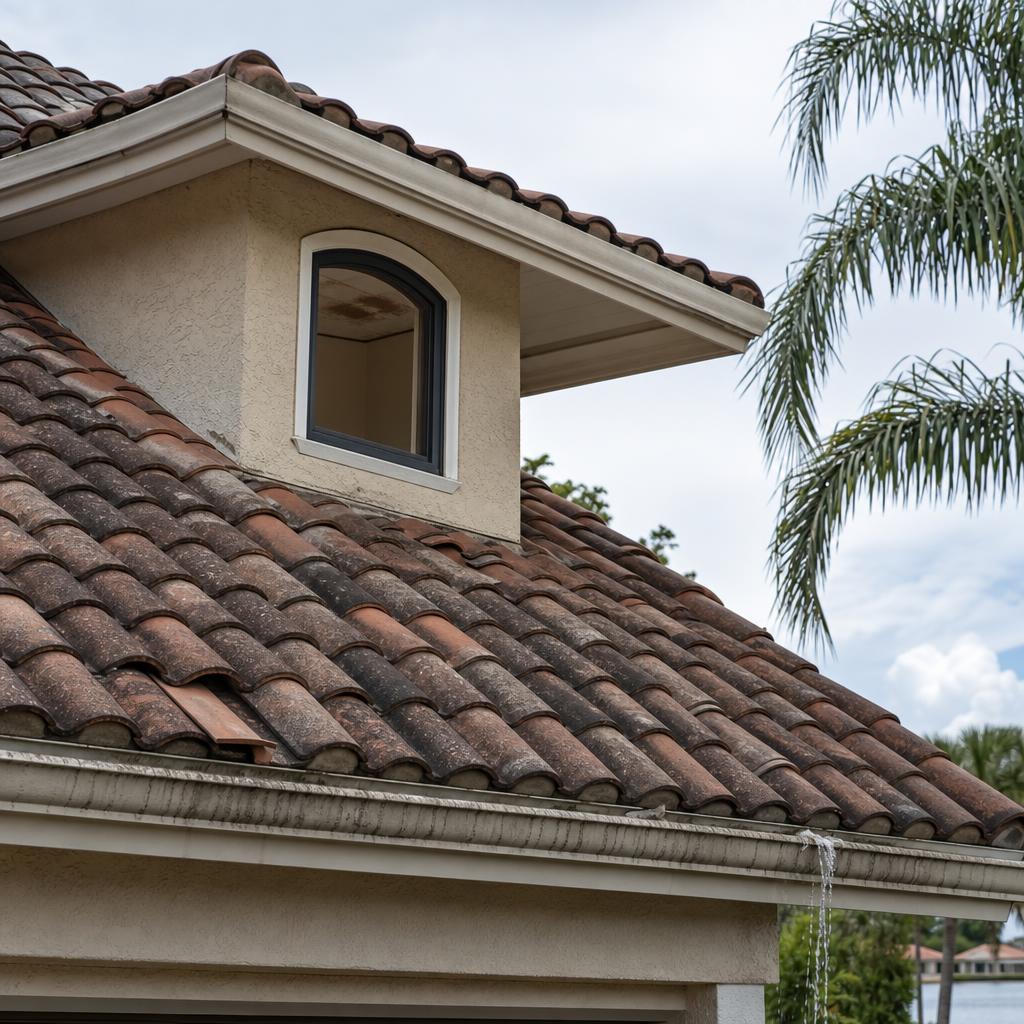
2. Slipped, Cracked, or Missing Tile
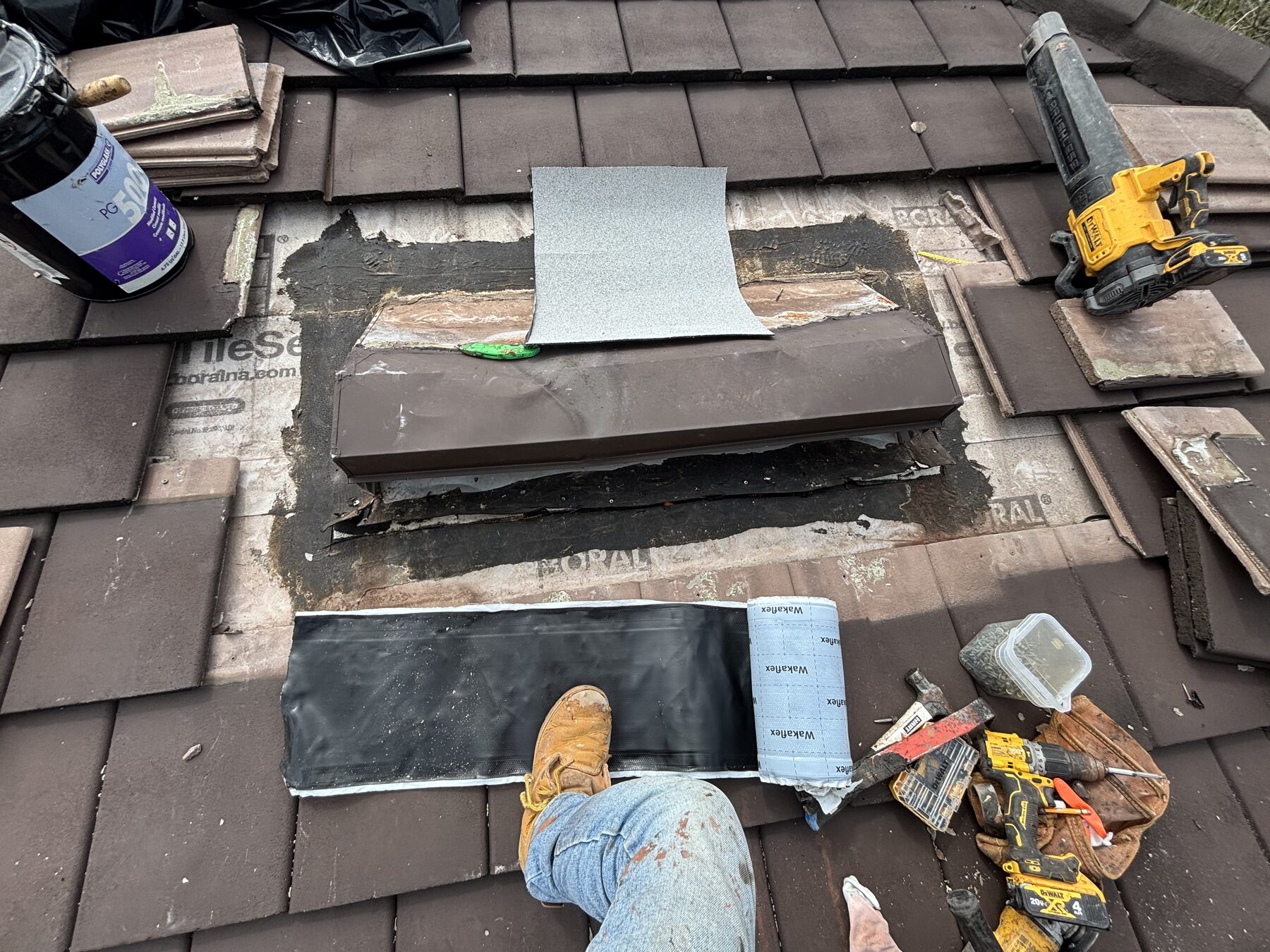
On a barrel tile roof, a tile that has slipped even a few inches exposes the underlayment beneath it to direct sun and rain. That underlayment is the actual waterproofing layer, and direct exposure is precisely what destroys it fastest.
Nothing looks dramatic. There is no leak yet. But the roof is now aging in that spot at many times its normal rate, and it is a cheap fix today and an expensive one in two years.
3. Dark Streaks Running Down the Roof
Those streaks are algae, most commonly a blue green organism called Gloeocapsa magma, and this region's heat, humidity, and rain are ideal for it. Near the water, salt in the air accelerates it further.
By itself, algae is largely cosmetic. What matters is that it traps moisture against the roof surface, and where it progresses into moss and lichen, those root into the material and cause genuine degradation. Established growth also conceals what is underneath, including cracked tile and deteriorated areas.
If your roof is visibly streaked from the street, the growth is well established.
4. Gutters That Overflow in Every Hard Rain
Homeowners treat this as a gutter annoyance. It is a roof risk.
When a gutter cannot take the water, it backs up under the roof edge, where it reaches fascia, underlayment, and decking. In a climate that delivers several inches in an hour, this happens repeatedly through the wet season.
Overflow has three usual causes: debris blockage, lost pitch from a sagging run, or too few downspouts for the roof area draining into it. All three are inexpensive to correct.
5. Granules Collecting at the Downspout
On a shingle roof, find where your downspout discharges and look at what is there.
Some granule loss is normal, particularly on a new roof. A steady accumulation of dark sand like grit is not. Granules are what shields the shingle mat from ultraviolet exposure, and a roof shedding them is aging rapidly in the areas losing them.
This is one of the earliest reliable indicators you can check yourself, from the ground, in about a minute.
6. A Cracked Pipe Boot You Have Never Looked At
The rubber collar around a plumbing vent pipe is one of the most common leak sources on any Southwest Florida roof, and it fails on a predictable schedule as UV degrades the rubber, often within a decade or so.
It is also among the least expensive repairs there is. The problem is that nobody looks at it, because it is a small component in the middle of a roof plane and it gives no warning until water is coming inside.
7. Nothing At All, After a Windy Storm
The most overlooked sign is the absence of one.
Wind commonly breaks the adhesive seal on shingles without moving them visibly, and lifts flashing edges that settle back down looking normal. The roof appears completely intact. Dozens of shingles are no longer sealed, and the next storm will take them.
This is why a post storm inspection is worth doing on a roof that looks fine. What you are checking for is specifically the damage that does not announce itself.
What to Do With This List
Walk your property and look at the ground level items: downspout discharge, gutter behavior in the last hard rain, visible streaking, and any tile visibly out of line. Look at your ceilings, including in closets and the garage where stains go unnoticed for years.
If any of it applies, get it looked at during the dry season while scheduling is easy and while the repair is still small. That timing decision is worth more money than almost anything else a Southwest Florida homeowner does about their roof.