Hurricane Season Roof Damage: What Southwest Florida Homeowners Need to Know
Hurricane season runs June through November, and homeowners in Collier, Lee, and Charlotte County have had more practice with it than most. This is not a post about hurricane preparedness generally. It is about the roof specifically: what to do before, what to do in the days after, and how to avoid the second disaster that follows every major storm in this region.
The Pre Season Window Is Now, Not June
The single most useful thing you can do for your roof happens before the season starts, and almost nobody does it.
Small defects that a roof shrugs off in ordinary weather become entry points under hurricane conditions. A pipe boot with a hairline crack leaks a little in a normal rain. Under sustained wind driven rain arriving nearly horizontally, it admits water continuously for hours. A few loose tiles that have not moved in two years become projectiles that damage the rest of the roof.
A pre season inspection catches those while they are cheap and while every roofer in the county still has availability. By late June, that availability is gone.
What Actually Fails in a Hurricane
Not usually what people expect.
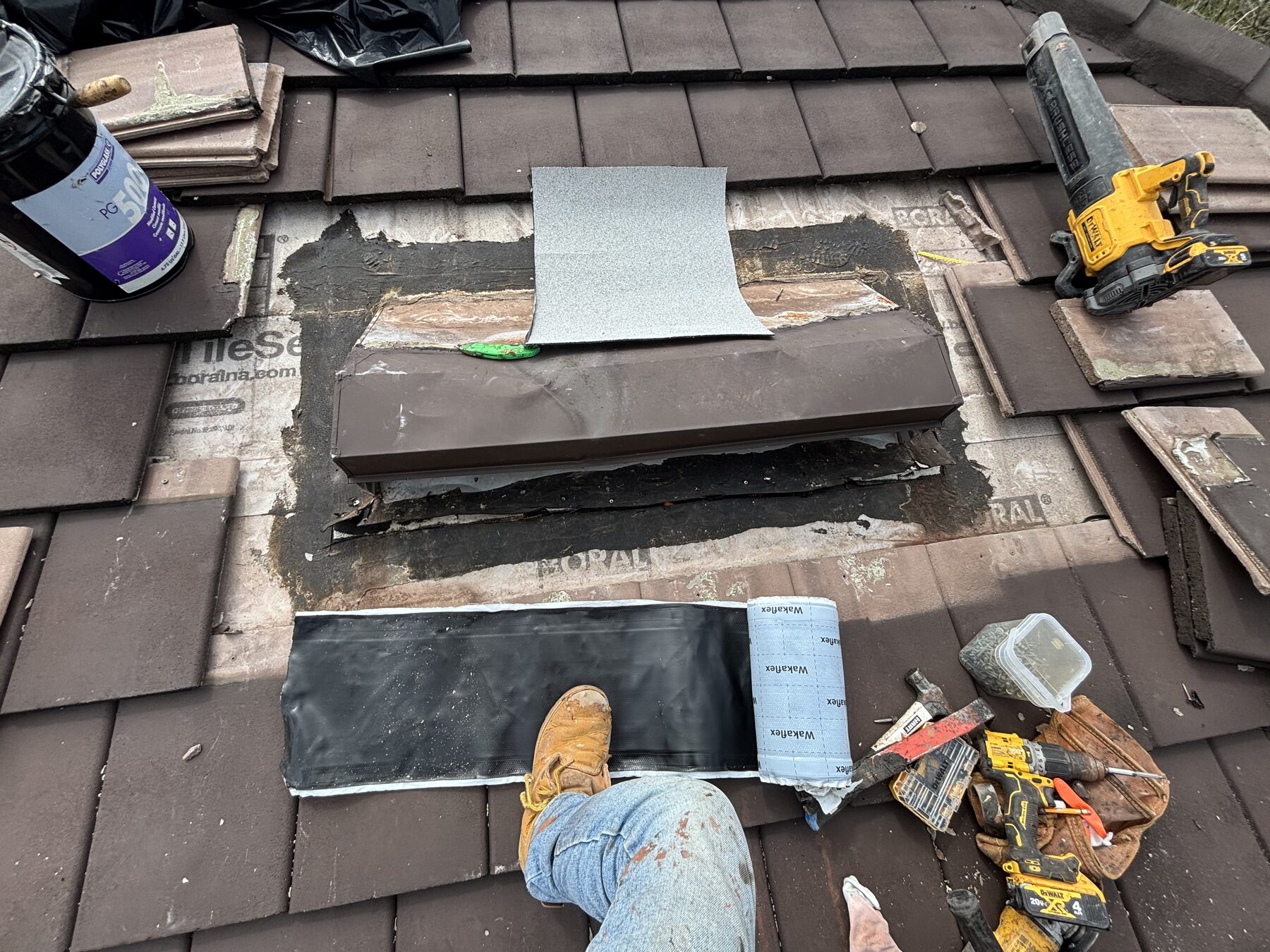
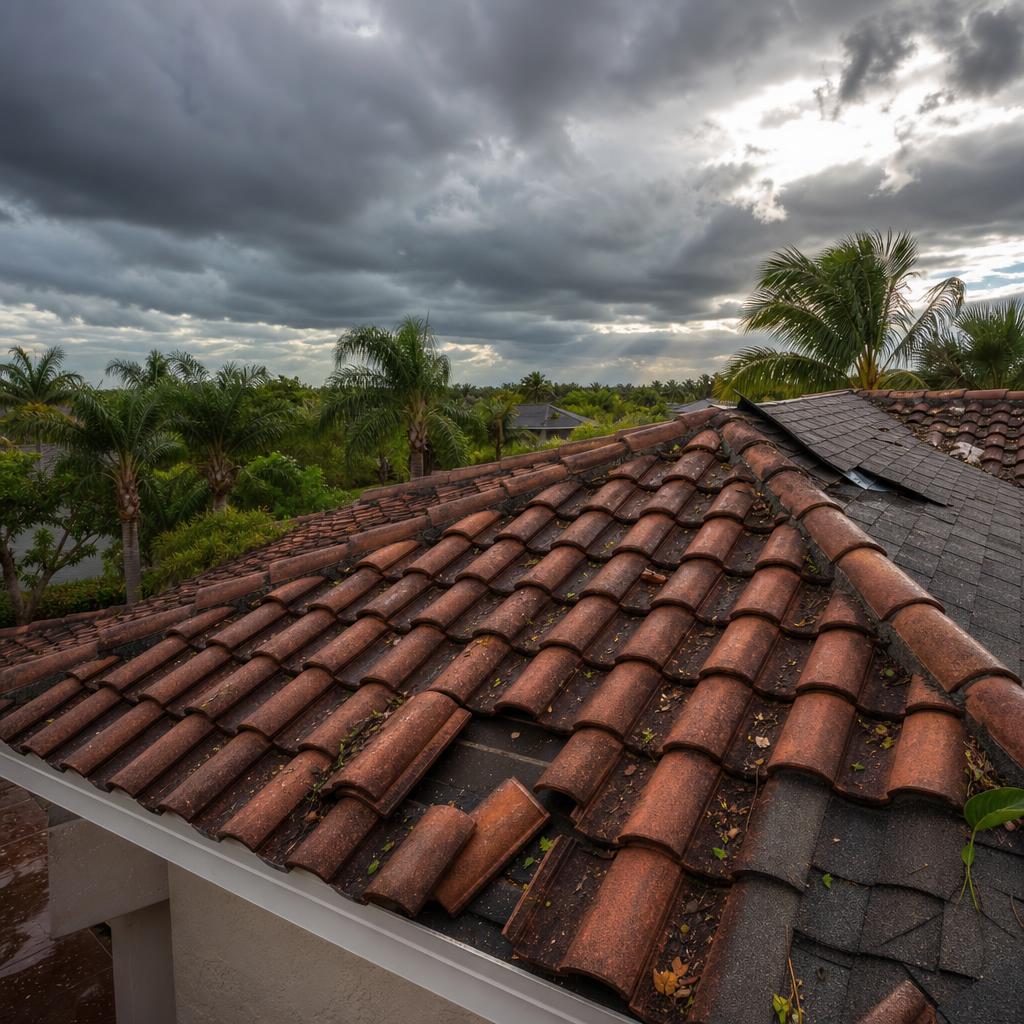
Catastrophic roof loss makes the news but is a minority of the damage. Far more common is the accumulation of smaller failures: shingle tabs with broken adhesive seals that have not visibly moved, tile displaced or cracked, ridge and hip mortar loosened, flashing lifted at edges, gutters torn loose, and debris impact.
The critical detail is that most of this is invisible from the ground. A roof that looks completely intact after a storm can have dozens of shingles no longer sealed down, which means the next storm will lift them. Homeowners who conclude they were spared because nothing looks wrong frequently were not.
The First Forty Eight Hours After a Storm
Get water under control inside first. Containers under active drips, furniture moved, and the breaker shut off to any area where water is near electrical.
Photograph everything before you clean up. The ceiling, the floor, damaged contents, and whatever you can see of the exterior from ground level. These photos matter later and they cost nothing now.
Do not get on the roof. This is the point of this post we care most about. Wet tile is severely slick, and storm damaged decking can be structurally unsound in areas that look completely normal. Serious homeowner falls happen every season in Southwest Florida, and a roof that will need repair either way is not worth a hospital visit.
Call for professional tarping if the roof is open. A properly installed tarp stops the intrusion and buys weeks.
The Storm Chaser Problem
This region knows this pattern well, and it repeats after every significant event.
Out of area contractors arrive within days, work neighborhoods door to door, emphasize urgency, and sign as many agreements as possible. Some do adequate work. Many do fast work with the wrong materials. Deposits are collected and occasionally that is the last anyone sees of them. Within a year most have moved on to the next storm in another state.
The consequences surface years later, and we still find them regularly across Fort Myers, Cape Coral, and the islands: tile set without addressing underlayment, sealant used in place of real flashing repair, tarps that were never followed up, and repairs with nobody left to stand behind them.
The protection is simple. Verify the license. Verify insurance. Confirm a local address and a history in this market. Be suspicious of anyone requiring a large deposit up front or pressuring you to sign the same day. If a company cannot show you work it did in Southwest Florida before the storm, that tells you what you need to know.
Documenting for an Insurance Claim
Whether or not you file, document properly.
Photograph exterior and interior damage and any damaged contents before moving anything. Note the date and the event. Keep receipts for mitigation expenses like tarps, buckets, and fans, which are often reimbursable. And get professional documentation of what failed and why.
That last item is what homeowners most often lack. Disputes frequently hinge on whether damage was sudden and storm caused or gradual and maintenance related, and photographs from a licensed roofing contractor carry weight that ground level phone photos do not. We document accurately either way, including when the honest finding is that damage predates the storm.
After the Season
Once things settle in late fall, get the roof looked at even if nothing failed.
A season of storms leaves accumulated stress: seals broken, fasteners worked loose, mortar cracked, debris in valleys. Addressing that in the dry season is straightforward and inexpensive. Discovering it next June is neither.